Professional hunting consultant & OUTFITTER
FIRST CLASS OTAGO FREE RANGE RED STAG
12 – 20 points, around or over 40 inches in antler length $POA
5 day hunt 1×1
Additional days $POA
Additional first class stags (dependent on tags remaining) $POA
300 Douglas Score +
NEW ZEALAND FREE RANGE HUNT PACKAGES
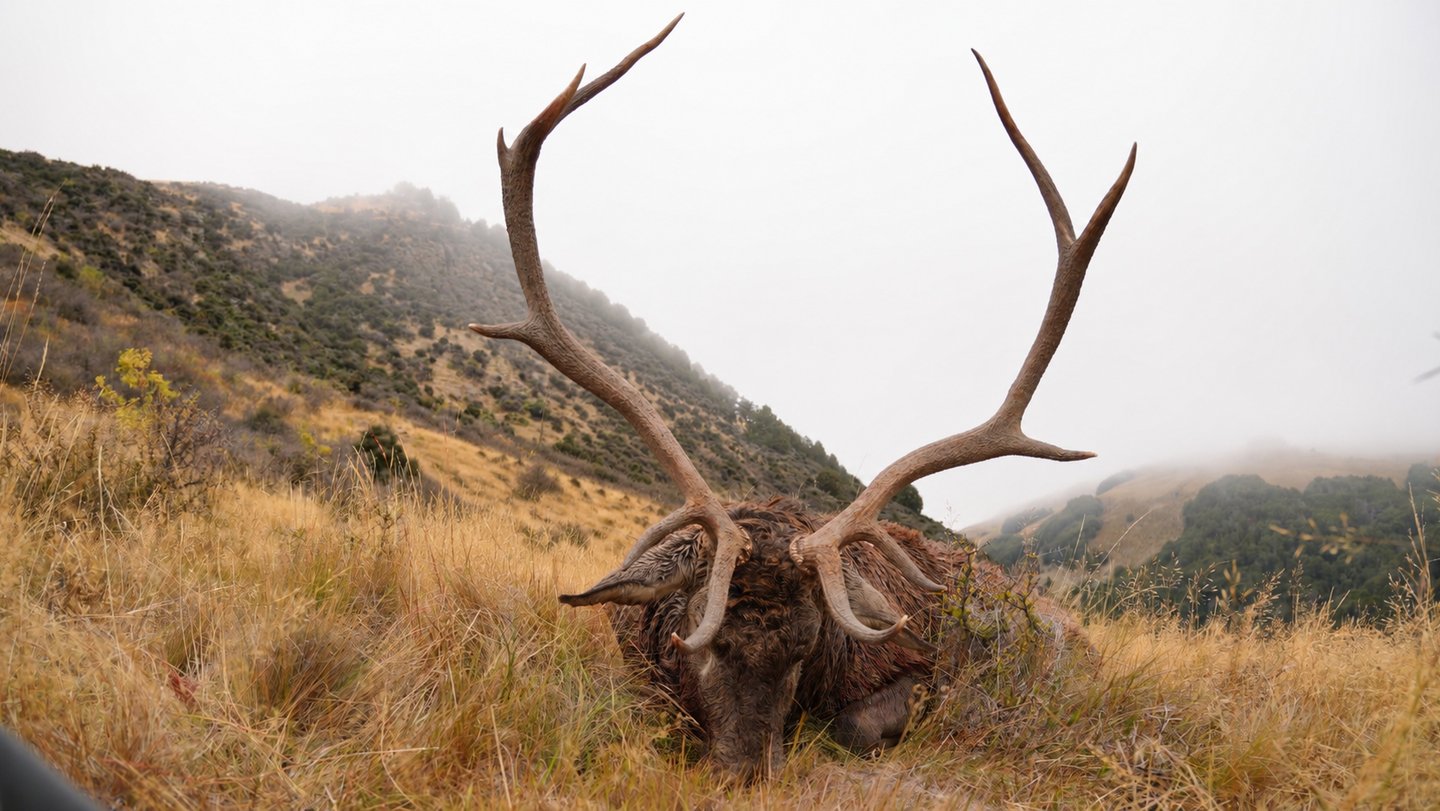
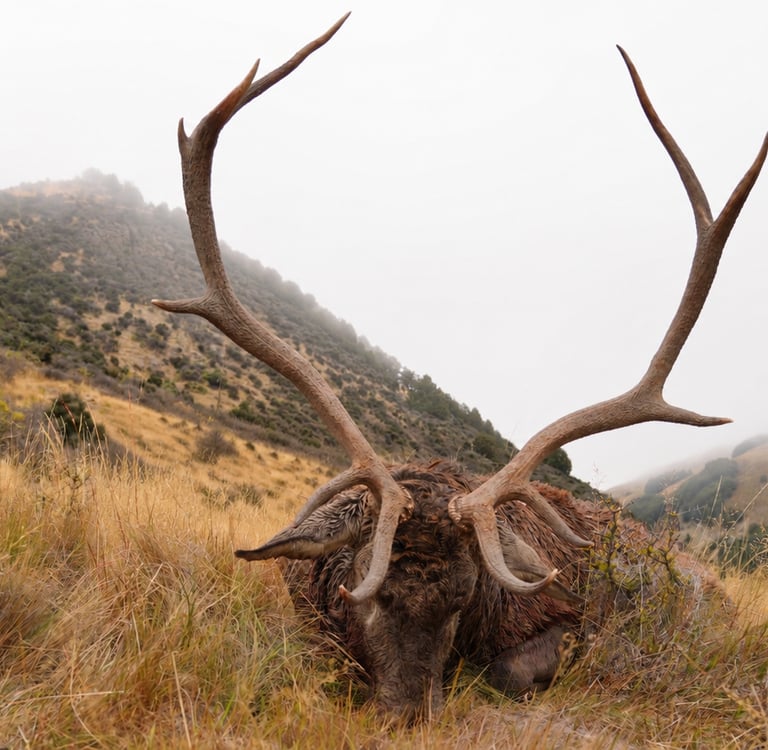
NEW ZEALANDS ULTIMATE FREE RANGE HUNT FROM A HISTORIC HERD
2026-2027
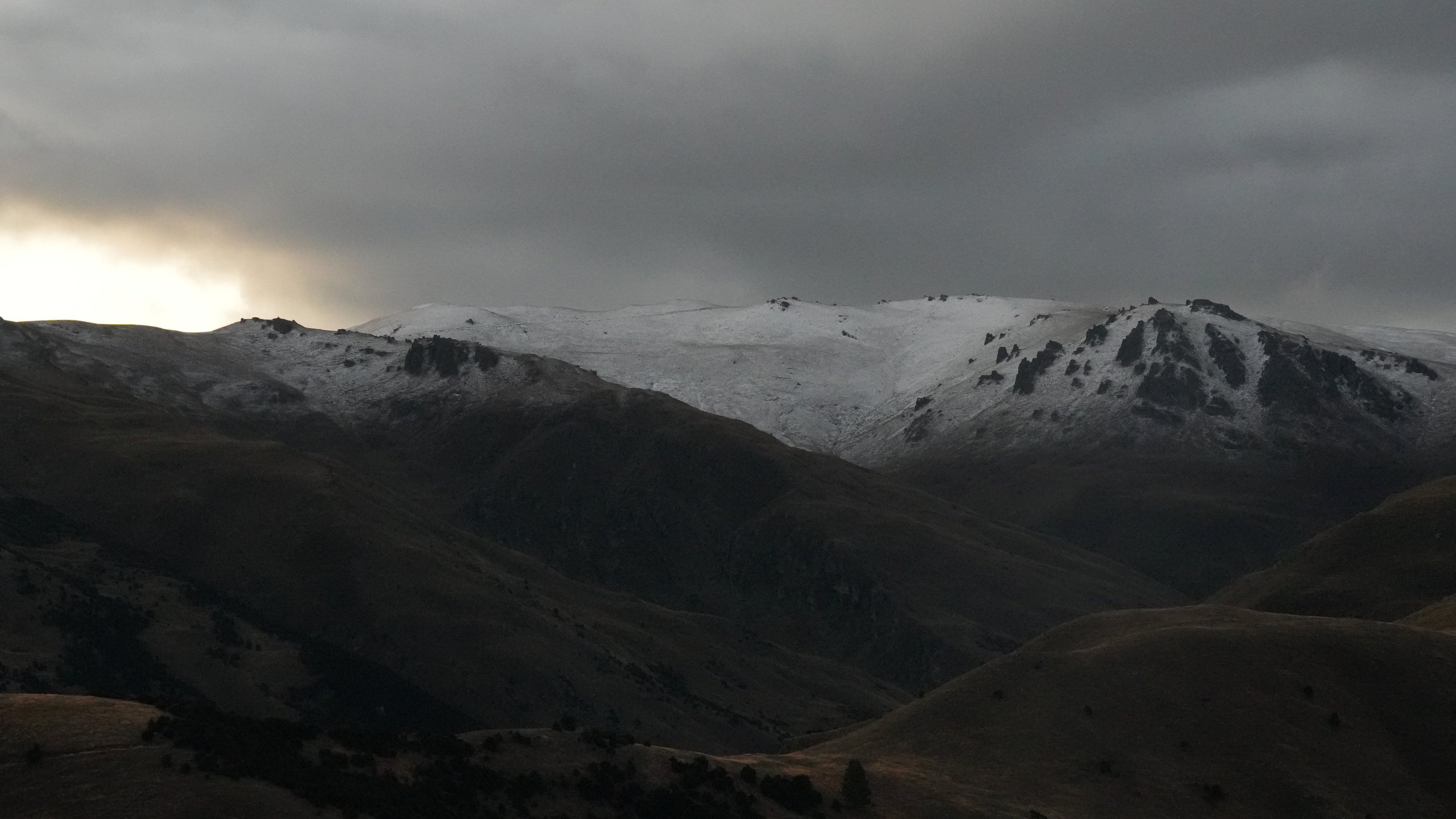


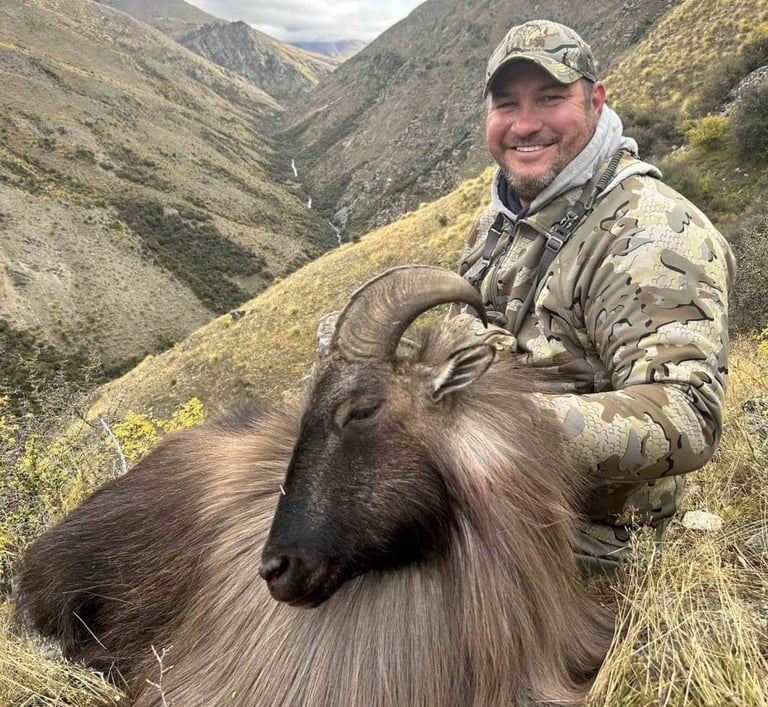
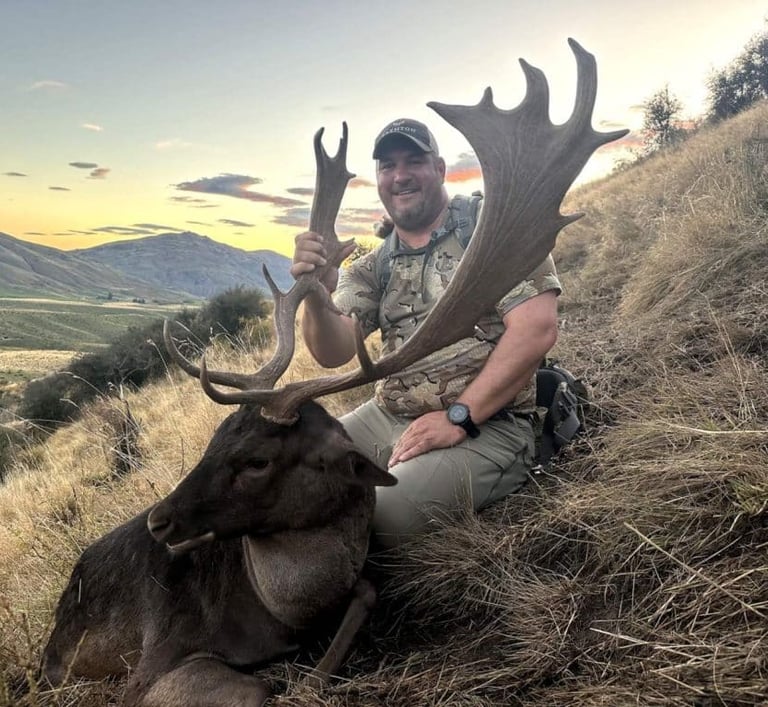
Can’t find the right package? Ethan can tailor your hunt from the species listed above.
Five days required for a single species hunt 1×1, additional trophies can be taken within the 5 days, but we generally advise to book 1-2 extra days per additional species wanted.
FOR AN UP TO DATE PRICE LIST
Please email me at ethan@deadlyconnectionshunting.com
or on
(New Zealand)
+64 2040167053
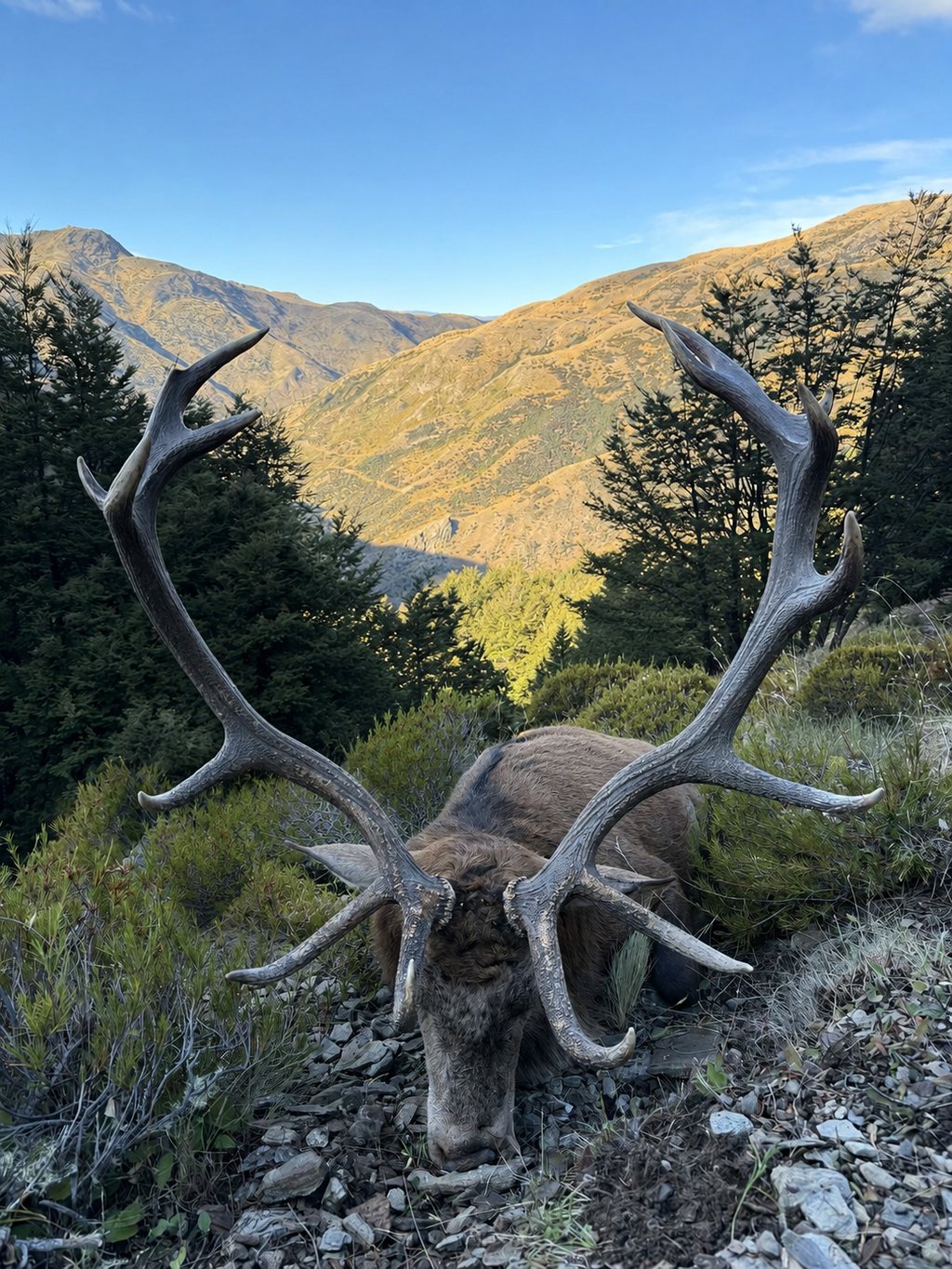
THE GOVERNERS TAG
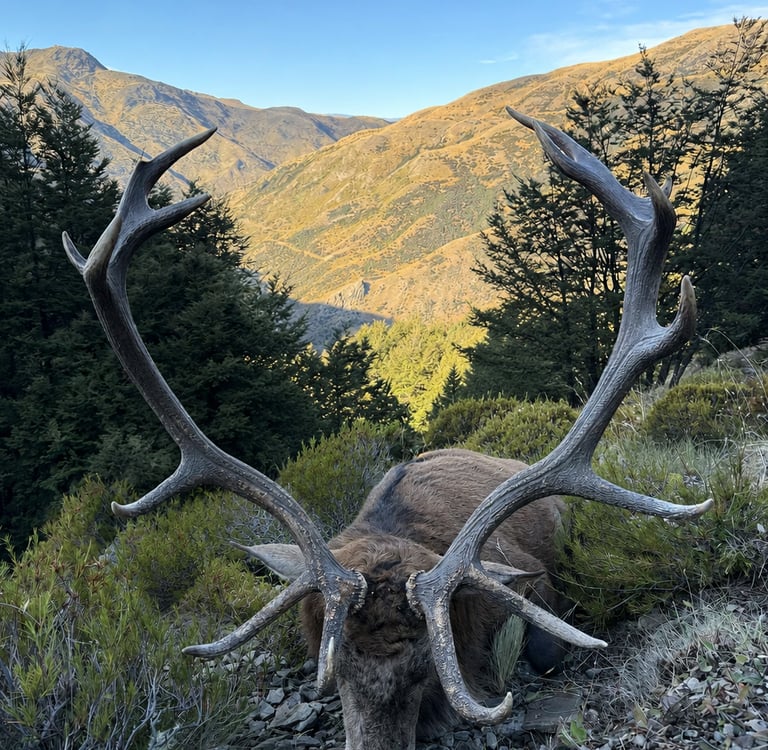
A special license to hunt a very special Otago stag. We offer only 1 Governor’s tag each season. By spending a huge amount of time in the field and careful observation we have identified a small handful of simply mind blowing Otago stags. The Governor’s tag will directly target these stags. price POA. Ask Ethan for the info pack on this unique opportunity.
1 stag available on our Governors tag per season
Free Range 3 Species Combo - Premium Rut Dates
7 Day Free-Range Otago Red Stag + Tahr + Fallow
CHAMOIS AVAILABLE
1X1 (Incl first-class stag) $POA
1X1 (incl second-class stag) $POA
Tahr and Fallow, best available.
Absolute prime rutting dates (mid April – early May) for 3 species.
Incredible hunting opportunities within our premium, exclusive, free-range 86,000-acre area.
Cabin accommodation (hunting camp) within our hunting lease.
Chamois can be added as a 4th species on a trophy fee basis (we recommend adding 3 additional days to hunt chamois to make a 10 day hunt).

Included in all Hunting Packages and Prices
Comfortable lodge accommodation on pick up day and the night of the last hunting day. Accommodation then varies from the lodge, to cabins and tent camps depending on the type of hunt booked. Generally estate hunts are run from the lodge and free range hunts are run from cabin and tent accommodation, however we can run free range hunts from the lodge. If you’re hunting free range red stag we may bypass the lodge.
4×4 access on private land hunts, helicopter access on wilderness hunts.
Airport pick up and return ex Queenstown, South Island, NZ.
All meals & accommodations, beer and wine.
full laundry facilities.
Sight in session at our lodge on pick up day.
A copy of photos and video footage.
Professional kiwi guide – genuine kiwi hospitality.
Caping and care of trophies. (Dip and pack fees are additional)
Rifle Hire Available $250 hunt duration.
Not included
Personal, property, travel insurance.
Compensation for hunting time lost due to bad weather.
Preparation of trophies for export, export documents, plywood crate, freighting of trophies, (Ask for this information).
Rifle hire $250 hunt duration.
Prices are subject to change.
Deposit Policy
A deposit of 50% is required to book one of our hunting packages, deposits are non refundable.
A Combination of 86,000 acres of private land hunting and seemingly endless public land on our partner outfitters concession
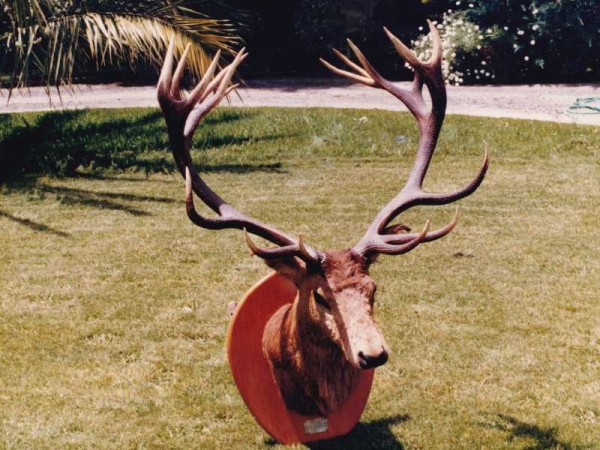
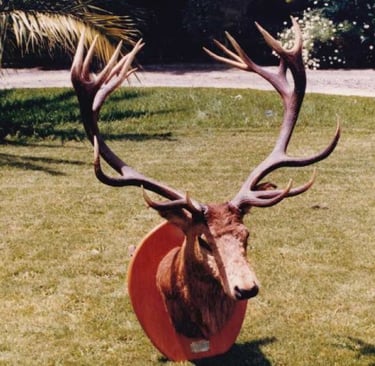
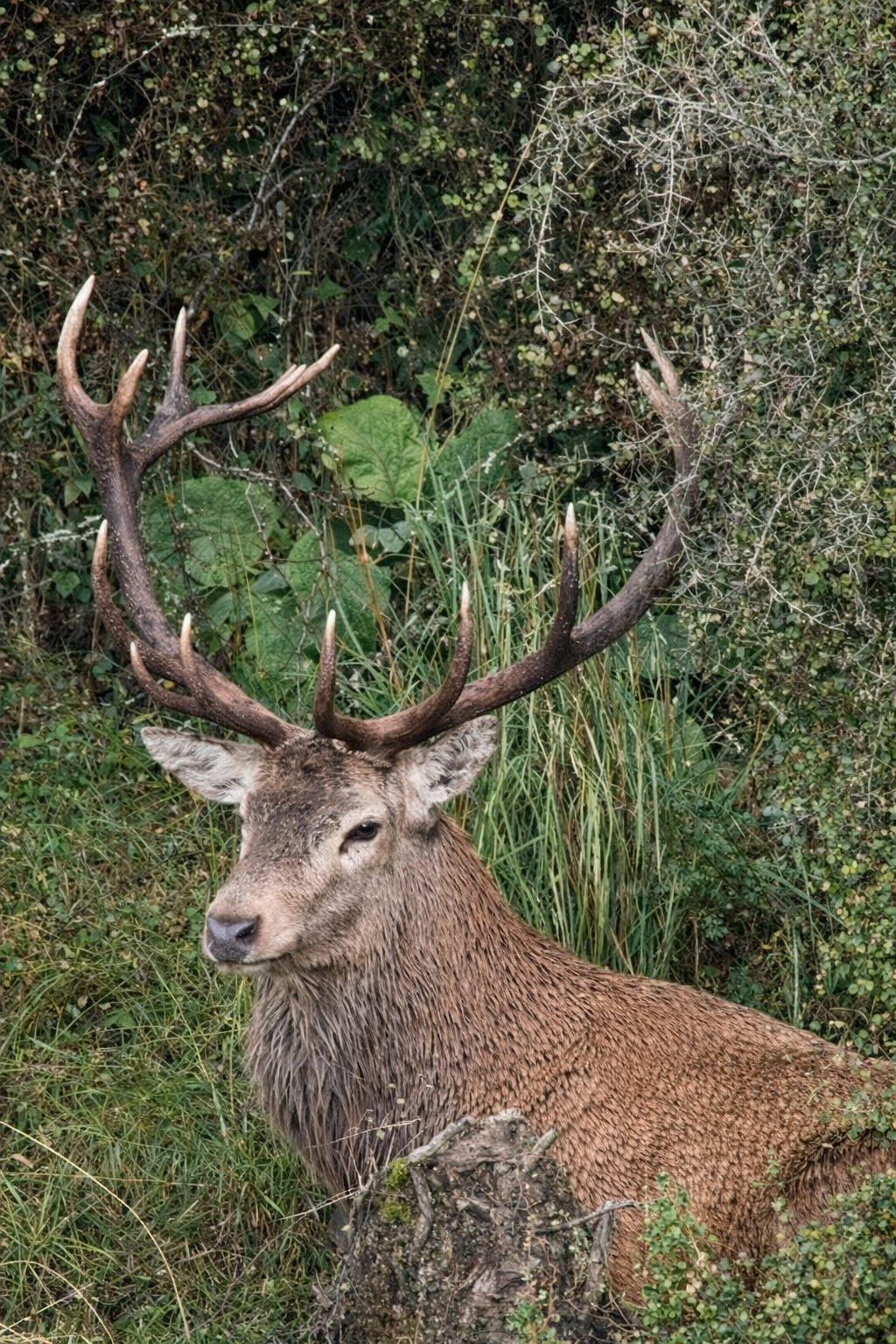
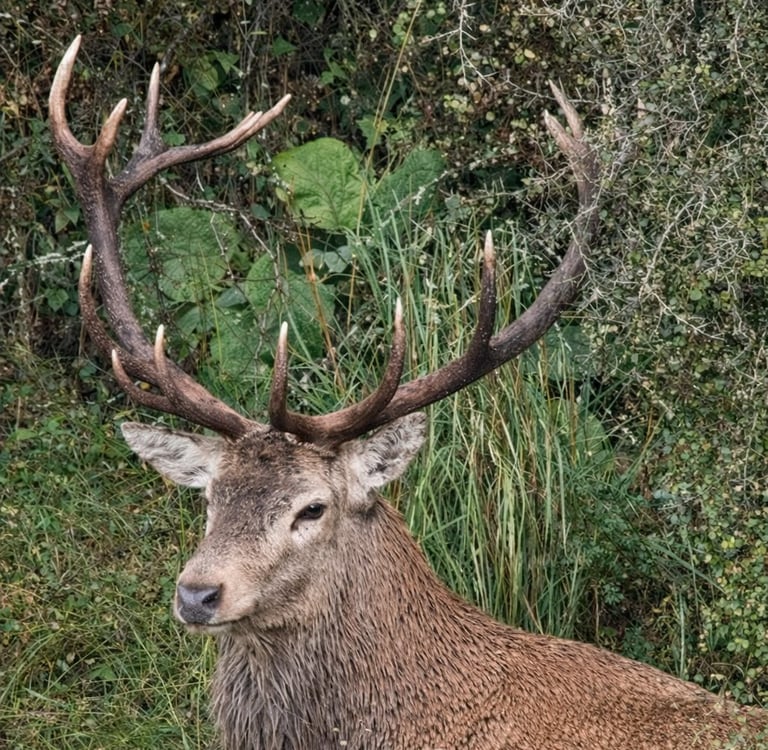
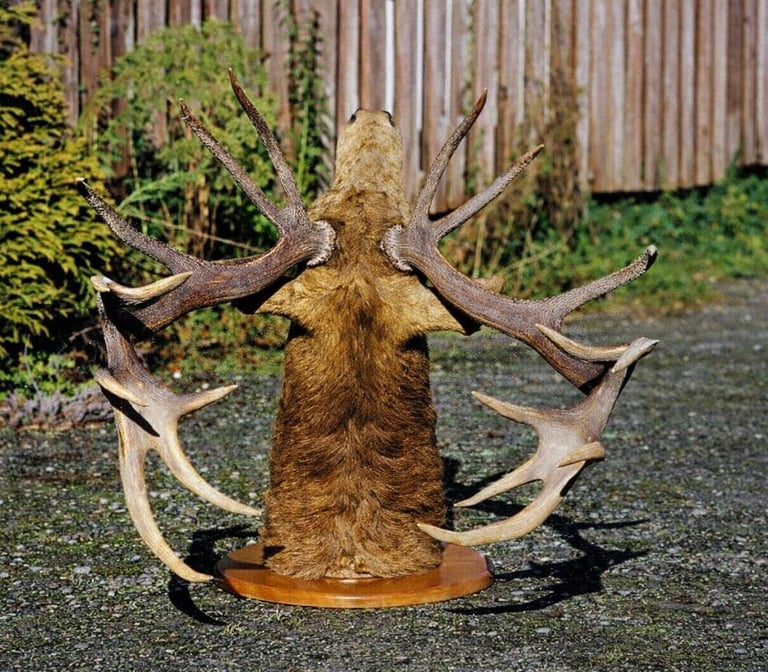
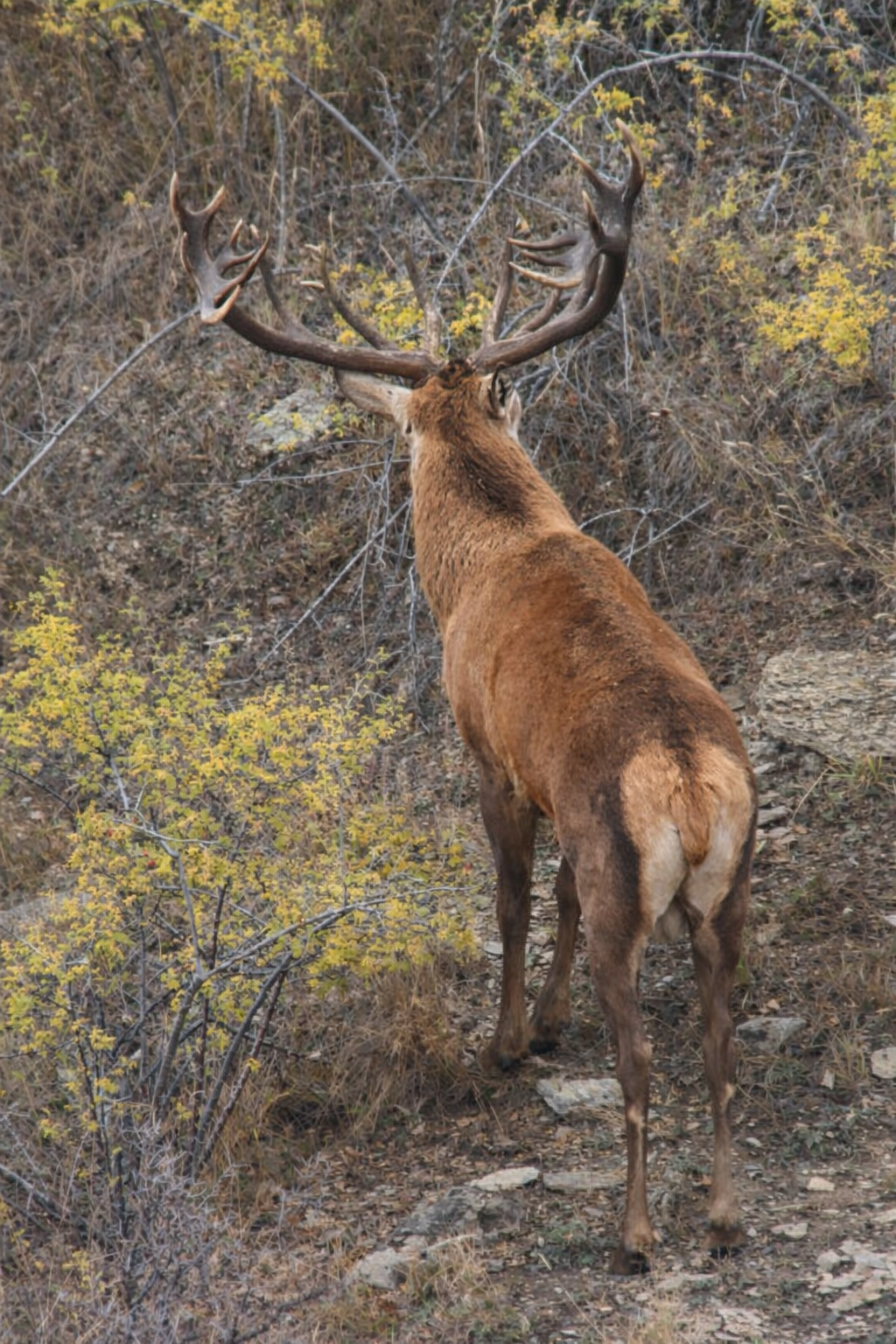
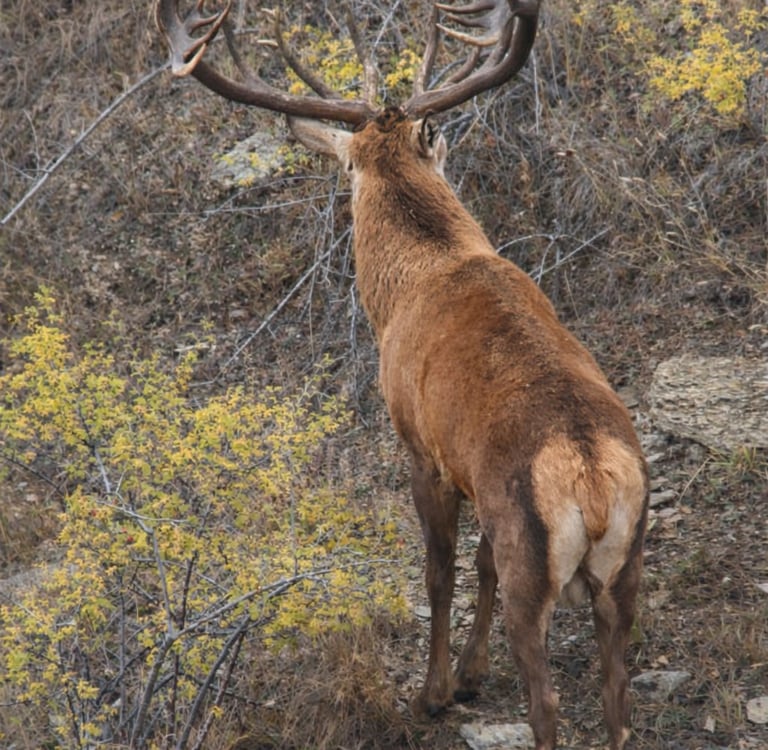
Macfarlane Trophy of 1924
Brutis as of 2025
An exceptional 5 day hunt for a wild Otago Red Stag, over 45,000 acres of mountainous private land hunting on an exclusive private lease for legendary Otago stags. Seven to 10 day combo hunts including an Otago red stag are also available.
Wild Otago red stags are renowned for their beautifully balanced, eye pleasing antlers. Trophies are scored on the Douglas Score, which is New Zealand’s national scoring system for wild trophies as Boone and Crockett is in the USA. Record book minimum is 300, we consistently take 9-10 incredible WILD trophies each season from around 300 to 360 class.
This is the equivalent of a free range Elk hunt for a 400+ bull on private land in the USA. Tags are LIMITED to 10 Otago red stags per season, this ensures we have a high number of mature stags roaming our free range area.
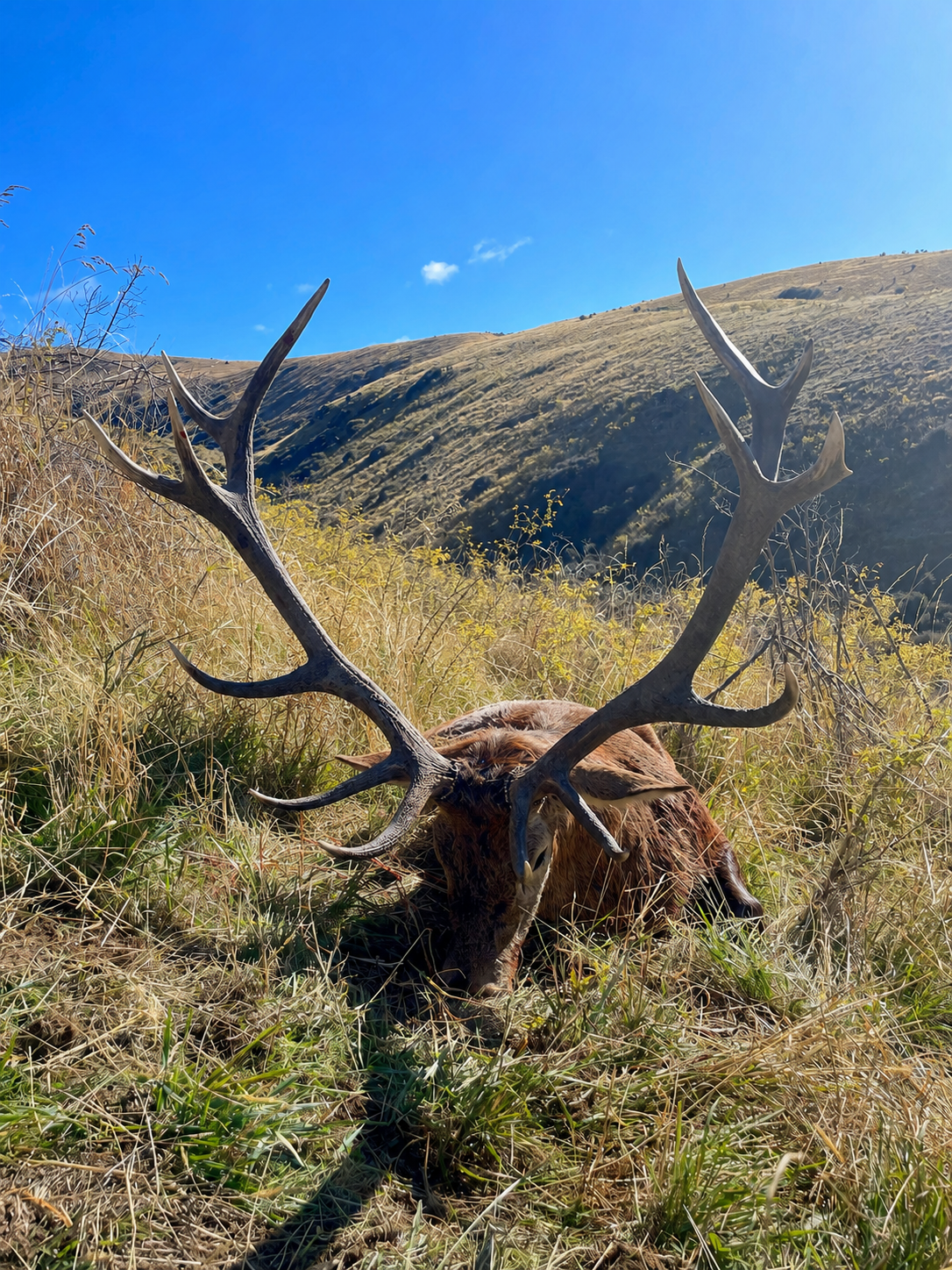
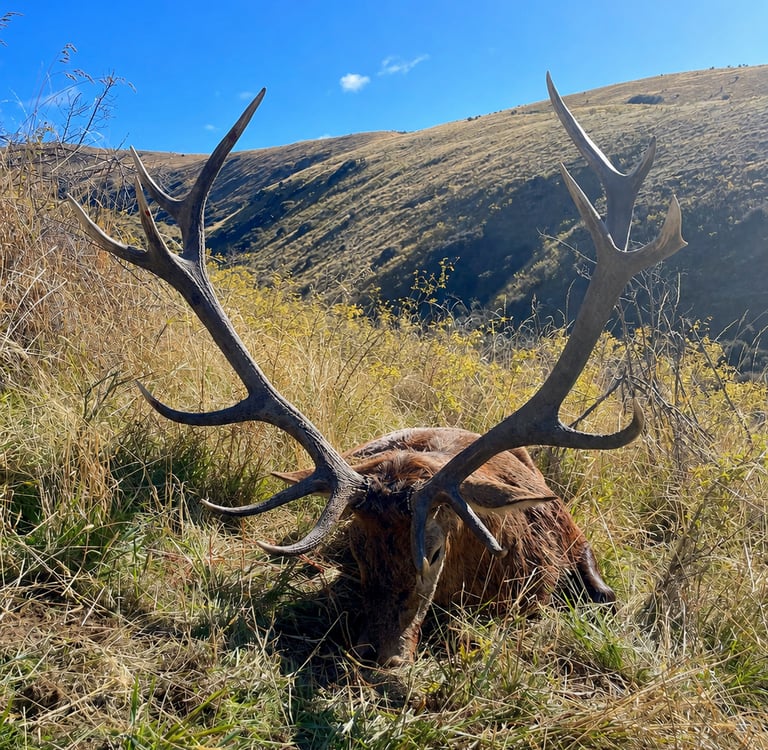
FIRST CLASS
PERFECTION IN WILD GENETICS
LARGE FRAME 40"LONG X 40"WIDE
STRONG CORRESSPONDING POINTS SCORES (332 DS)
NQF
SYMMETRICAL
CLOSE TO FIRST CLASS IN SCORE
STRONG LOWER POINTS, SLIGHTLY WEAKER TOPS
SECOND CLASS
LARGE FRAME 45"
WONT SCORE 300+ DS
AWESOME OLD BATTLER
For More Information Contact Me below.
CLASS EXAMPLES






FREE RANGE STAG PRICING
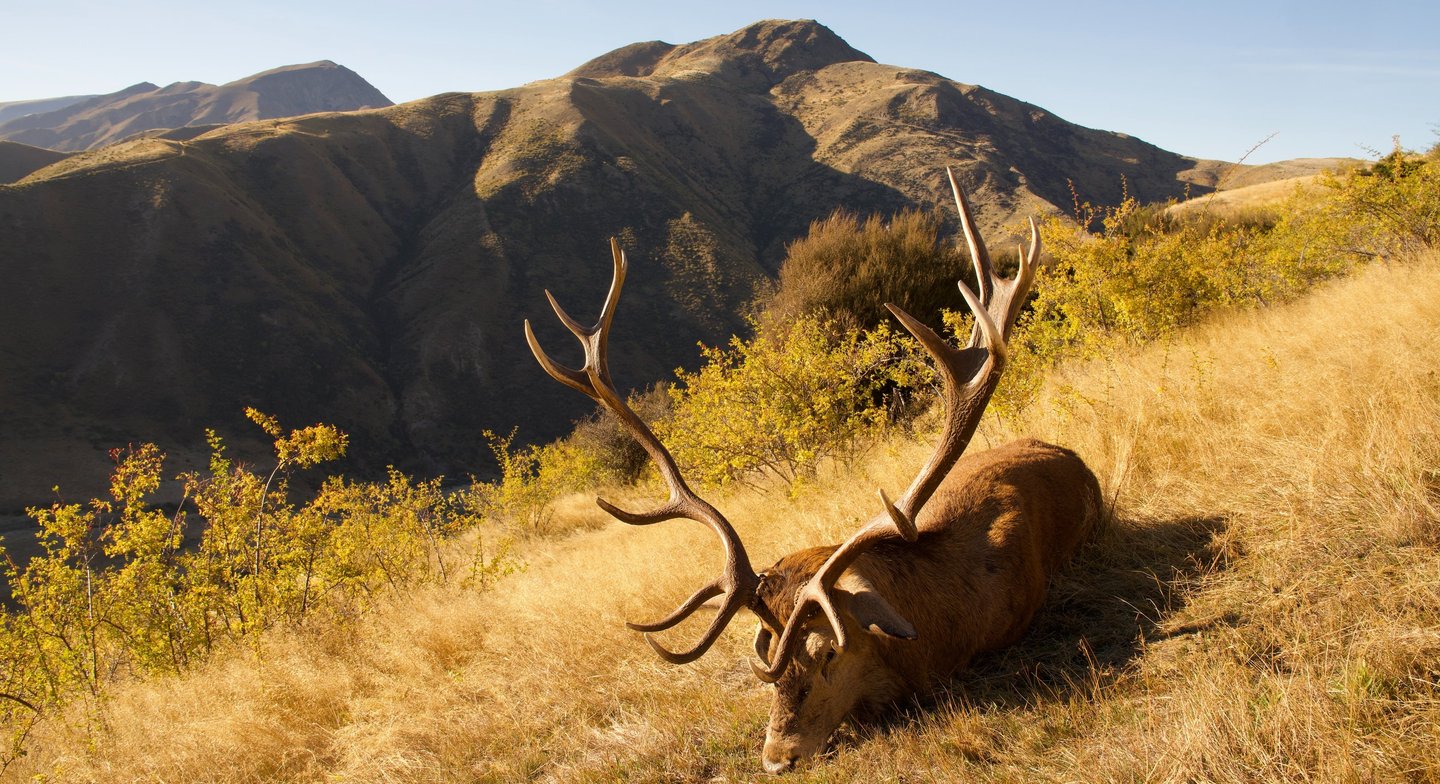
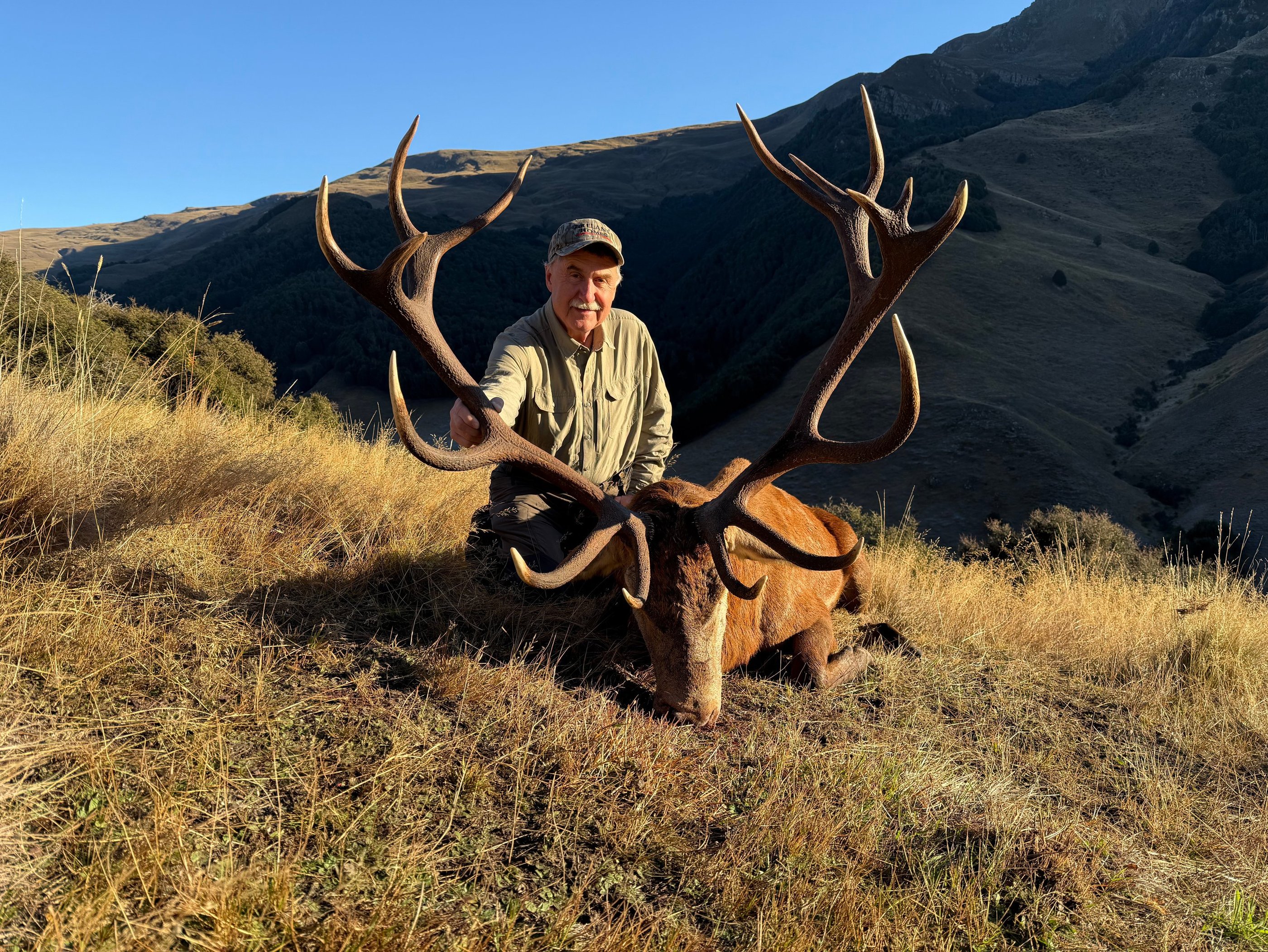
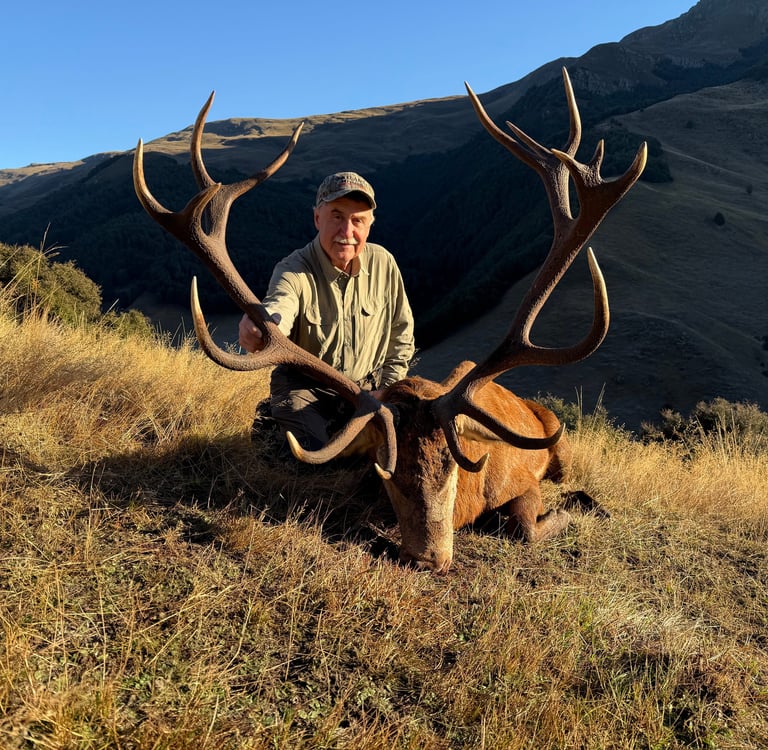
A Class Above The Rest
The name Governor’s Tag we have adopted from the American Tag and license system where the purchaser is exempt from any application, drawing / ballot process, or waiting period to secure a hunt for a limited opportunity species and potentially for one of the largest trophies available. A big attraction of purchasing this tag is that the hunter is contributing to the conservation of the species that they care about. These same principles apply to the Otago Stag Governors Tag. One Governors tag available per season. Available 2026. Available 2027.
The stag in the photo above was named Goldie, a regular to his rutting grounds and a pleasure to witness each season. He was shot in 2025 and scored an exceptional 354 Douglas score putting him in a class above the majority of our First Class Stags and well within the top 50 of all time records for the herd.
Currently one Governors tag remains for a stag first spotted in 2019, called Brutis. He is the spitting image of a famous Otago red stag shot in 1924 almost exactly 100 years ago. The 1924 Trophy was shot in the Macfarlane valley of Otago scoring an astonishing 394 3/4 Douglas score making him the second highest scoring stag in New Zealand history.
Notice how Brutis has almost exactly the corresponding points as the 1924 Macfarlane trophy.
A truly once in 100 year trophy.
See for yourself.
SECOND CLASS OTAGO FREE RANGE RED STAG
10 – 16 points $POA
5 day hunt 1×1
Additional days $POA
Additional Second Class Stag $POA
Management stags priced at guides discretion
Upgrade to NQF stag (Not Quite First Class) $POA
Second class stags are generally missing their bey / bez tines / G 2 tines or have crown points that are not of classical form, or both of these traits. These are still big framed mature stags that may surpass 40 inches in antler length.
Free range Tahr, Fallow buck, Chamois & wild Goat can be added to this hunt. Pigs can be shot if opportunity arises for no additional cost.
Ask for further info about First-Class, Second-Class and NQF free-range Otago red stags.