Professional hunting consultant & OUTFITTER
WATER BUFFALO
Australian Dangerous Game
A Wild Frontier
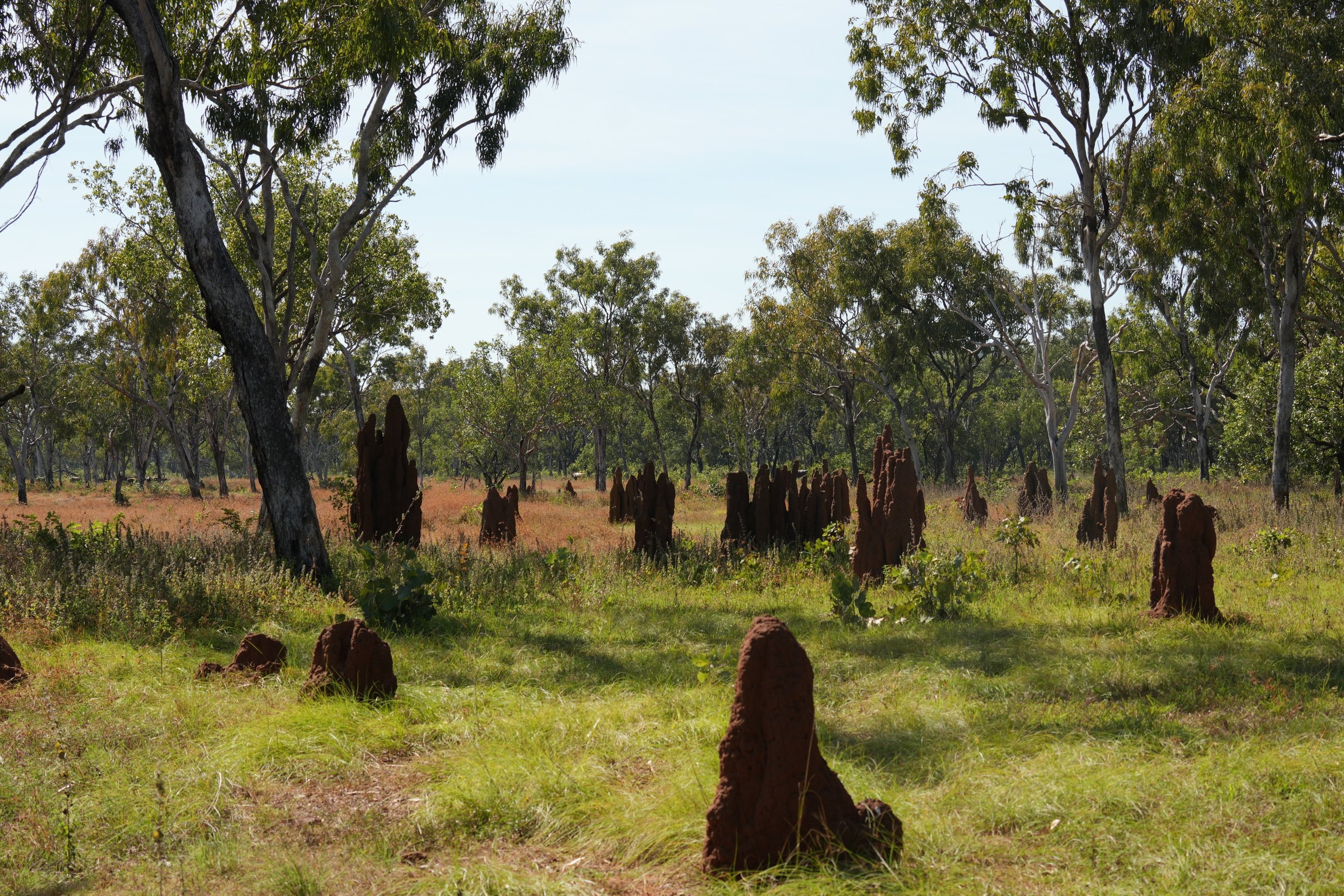
The Top End is not a place you simply visit it confronts you. The heat presses down like a living thing. The air smells of damp earth, salt, and eucalyptus. Every step carries the sense that you are walking through something ancient, something still ruled by nature’s laws.
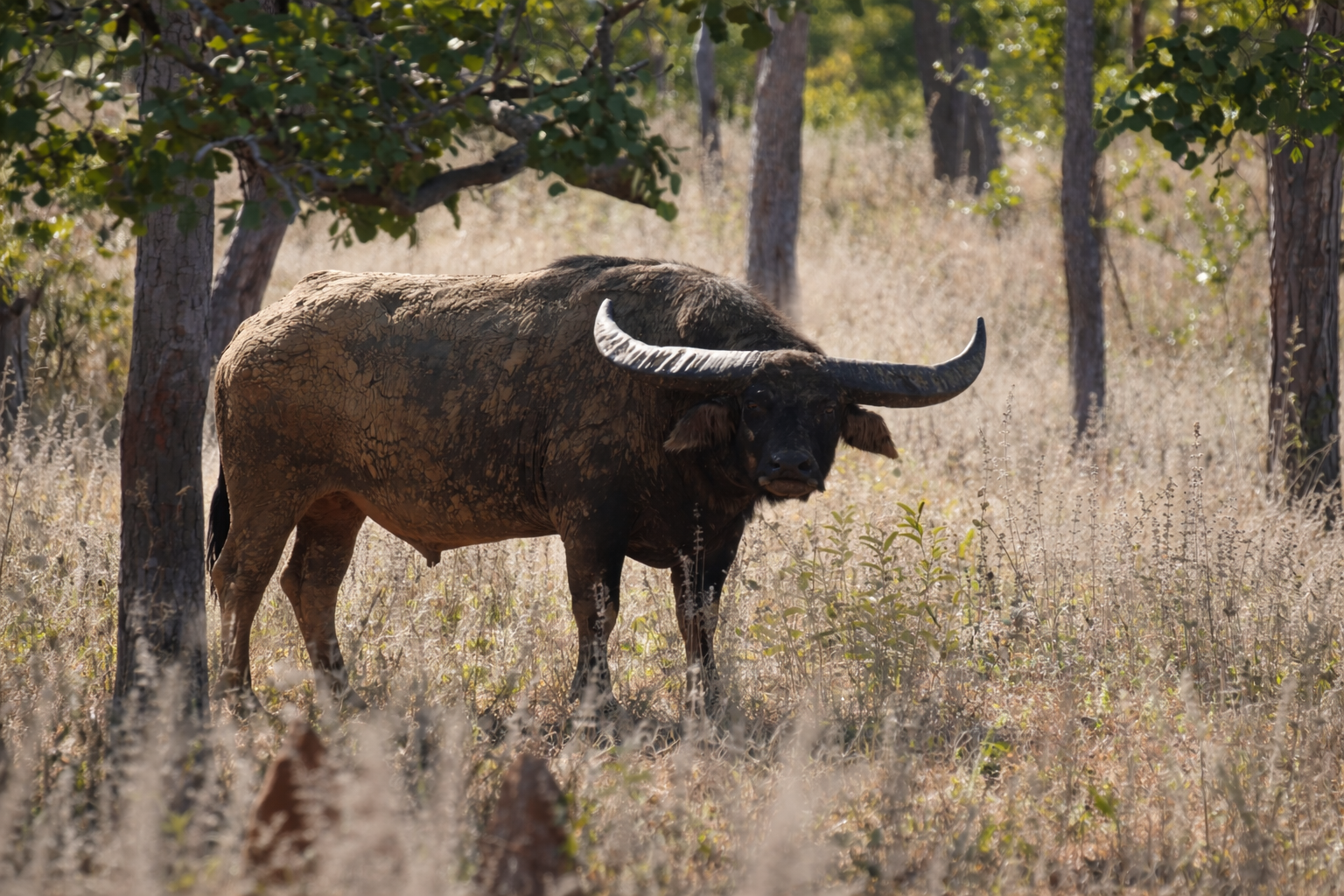
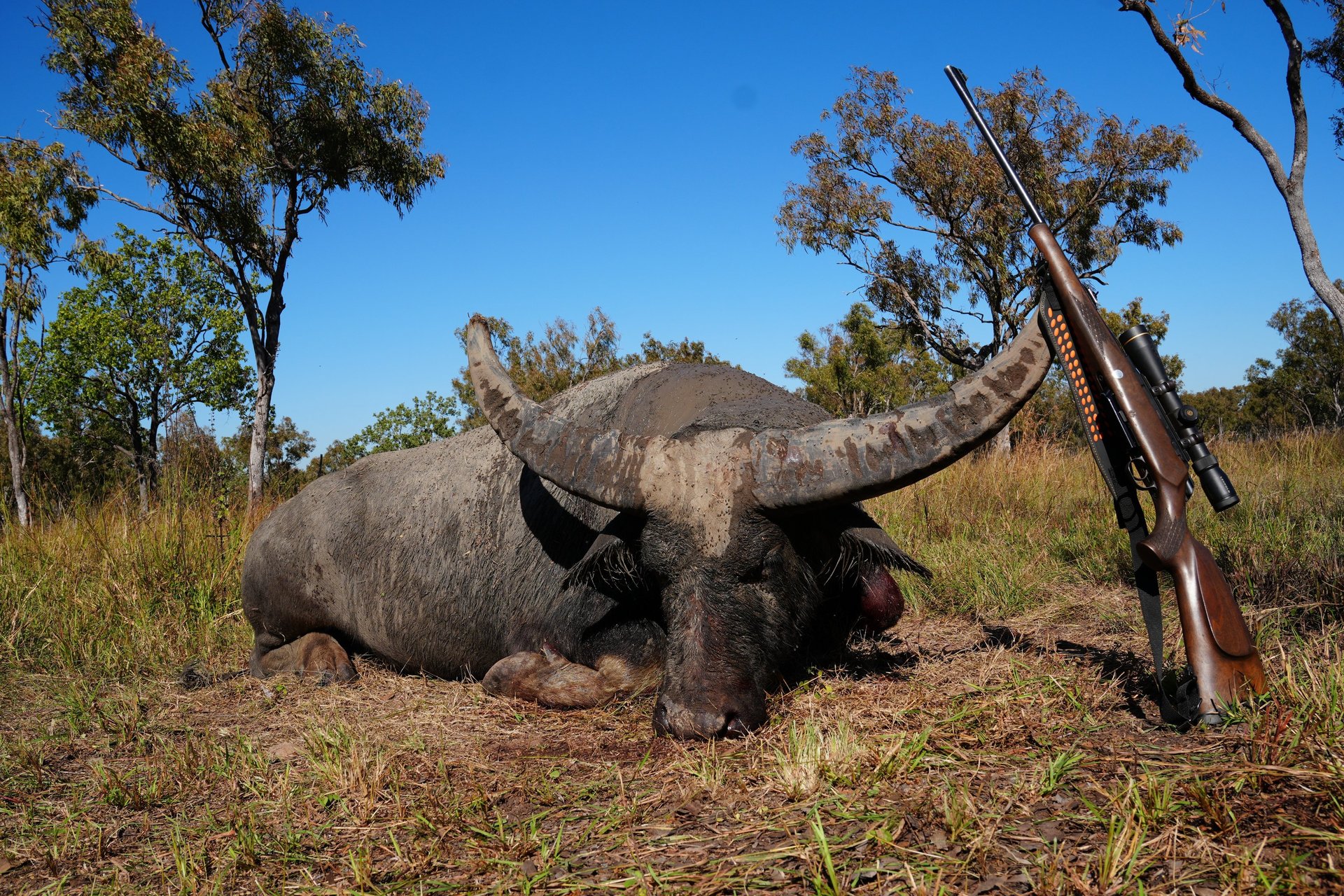
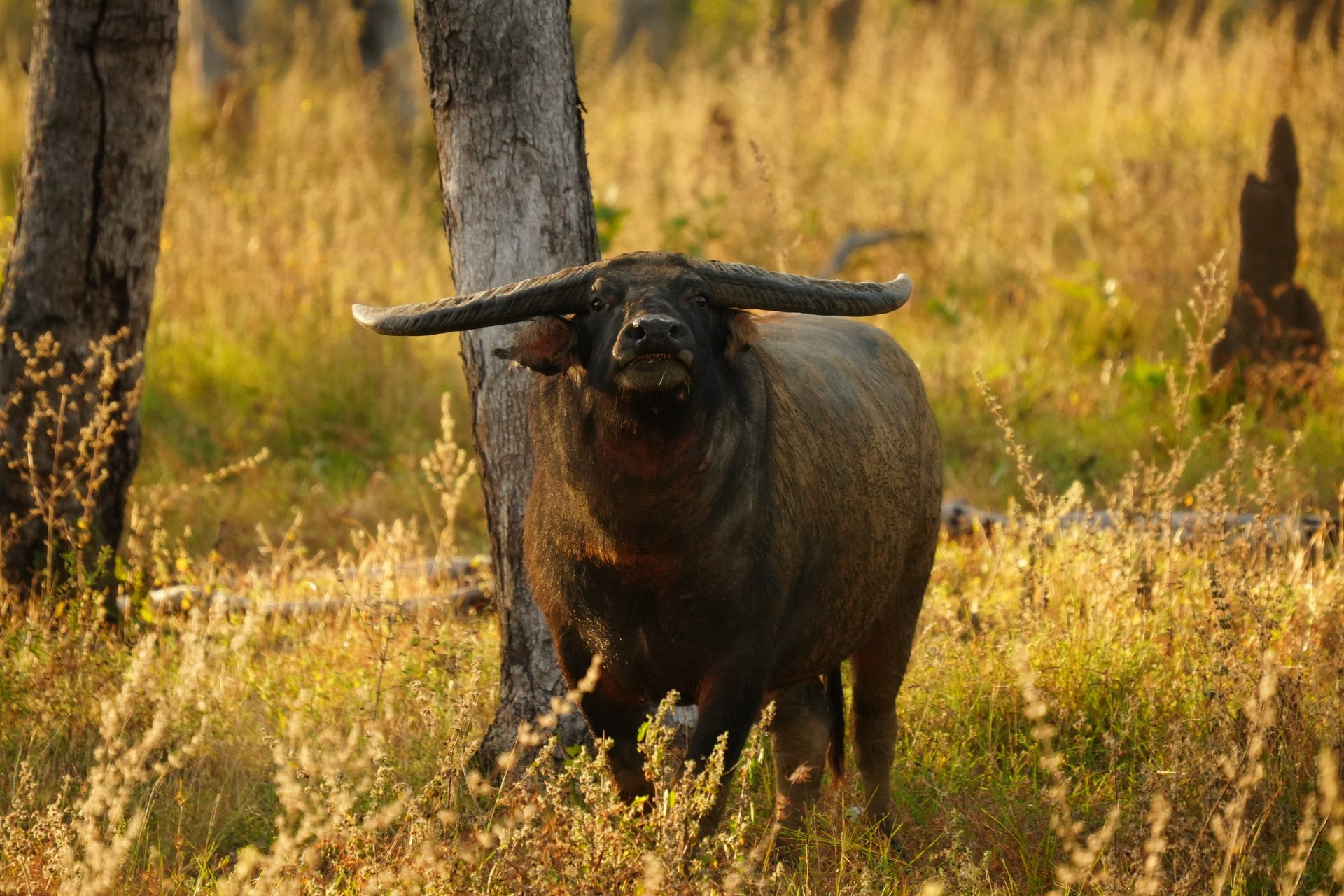
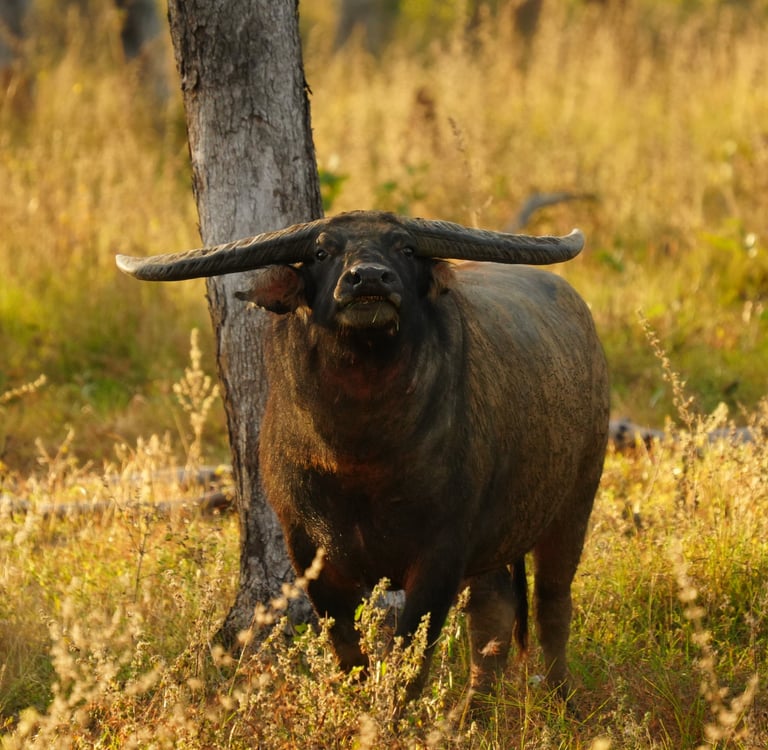
Water buffalo were introduced here more than a century ago and in this vast wilderness they have become part of the landscape. Massive 2000lb battle scarred beasts perfectly adapted to swamp, scrub, and monsoon forest. Bulls can weigh over a ton, their horns wide and heavy..
They are powerful.
They are unpredictable.
The Stalk
Hunting buffalo in Arnhem Land is not about distance shots or comfort. Its about getting up close and personal.
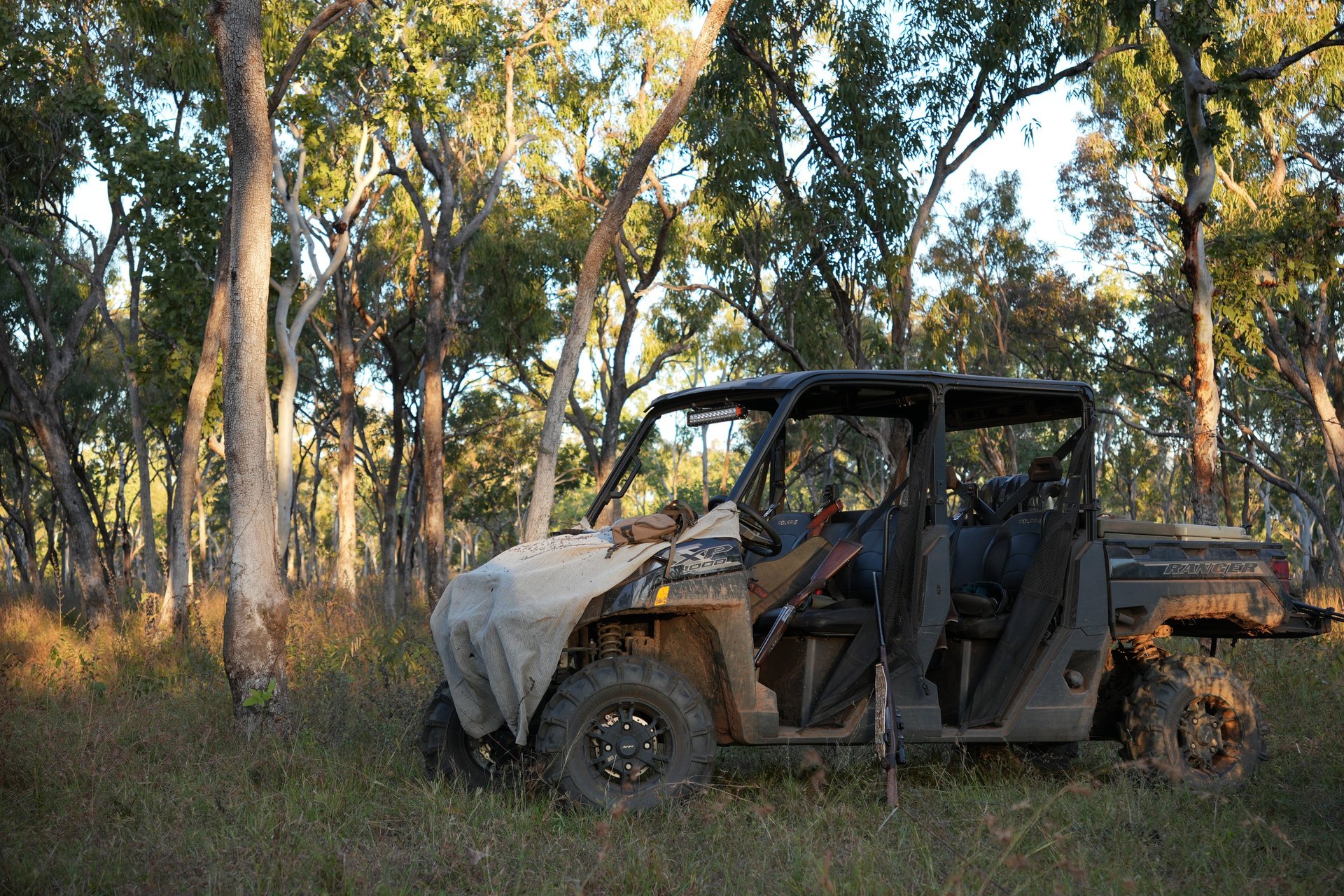
We access the 4.5million acre Concession via Side by Side and 4x4. Tracks have been built in the remote wilderness spreading out from camp, we work our way through these tracks during the day spotting from the vehicle or on foot. Then we stalk in. Using the vegetation and trees as cover we aim to get under 50 yards or as close as possible. The first shot is your most important, take your time and place it well because these buffalo are some of the toughest animals to kill in the world.
A fully grown bull of the Water buffalo is an imposing animal in every respect. Mature males commonly tip the scales well beyond half a tonne, old bulls can push close to or beyond 1,000 kg or 2000 Ib. Their sheer bulk, combined with heavy bone and dense muscle, gives them a formidable presence in the field.
In the dry season, older bulls often separate from herds and adopt a more solitary pattern. They favour country where open grazing areas blend into thicker cover rocky outcrops, scrub-lined creek beds, shallow gullies, and isolated water sources. These transition zones offer both visibility and security, making them preferred haunts for seasoned animals.
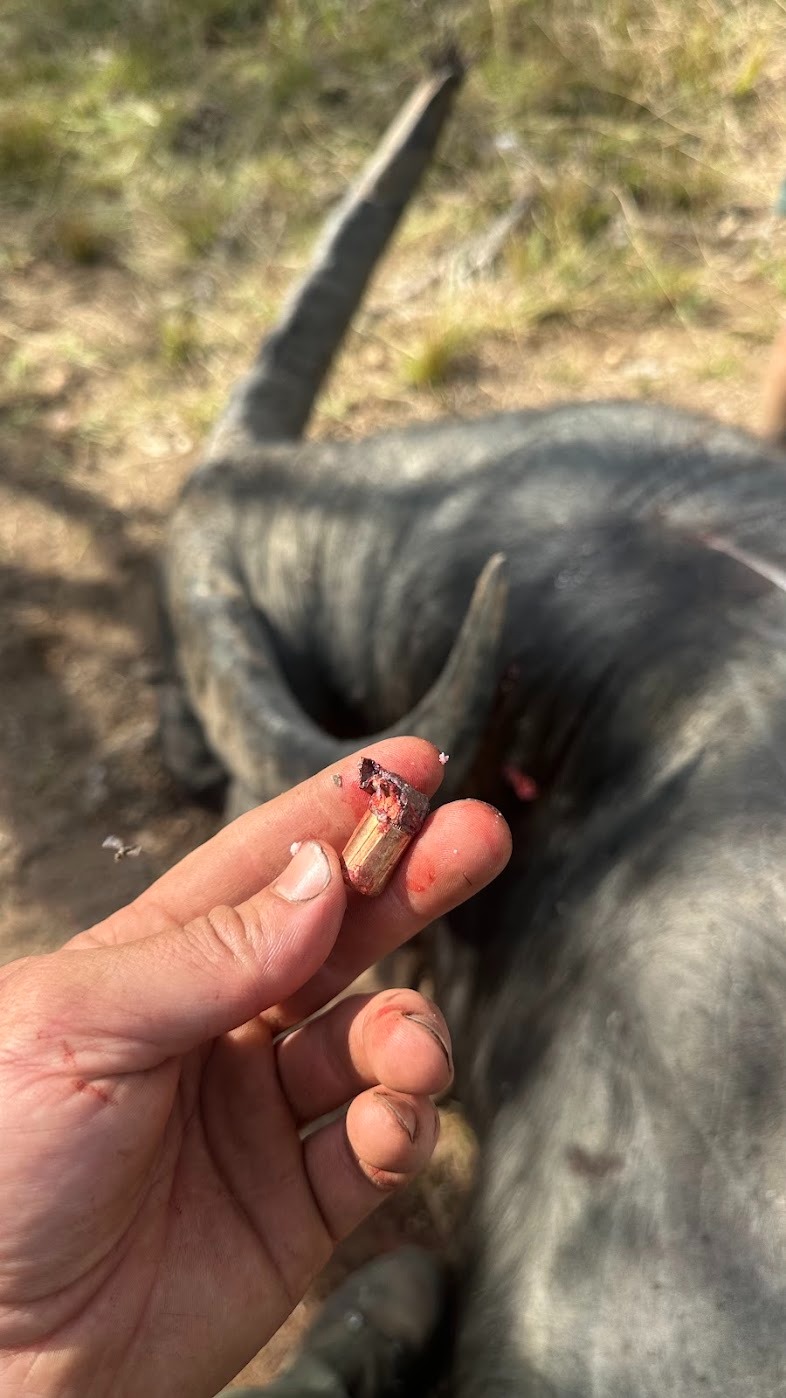
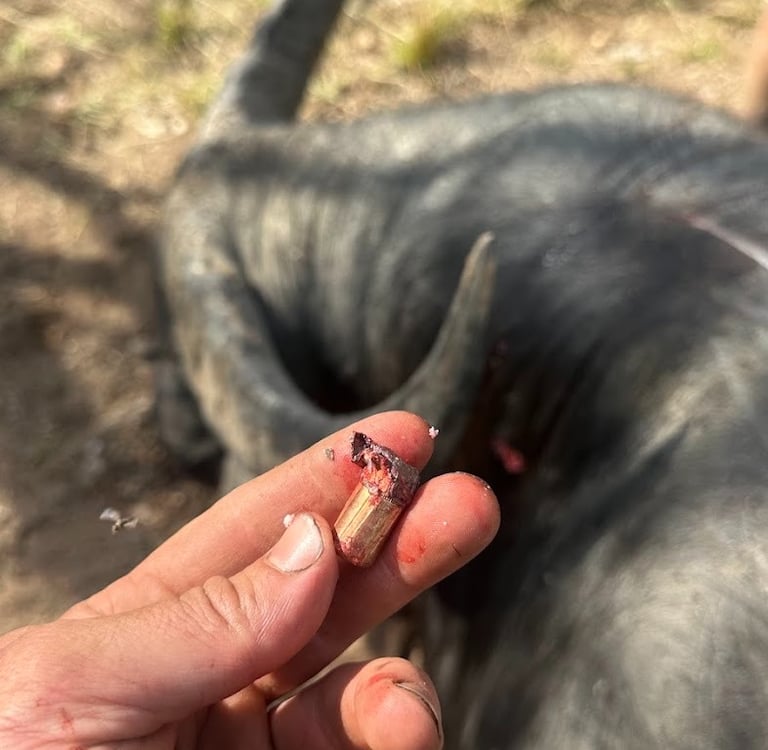
Given the buffalo’s durability and reputation for standing its ground, rifle choice is taken seriously. It is recommended hunters use heavier calibres such as the .375 H&H, .416, or .458 to ensure reliable penetration and stopping power during close encounters.
Most opportunities arise at relatively short distances. Careful approaches often close the gap to within a few dozen metres, particularly around springs, swamps, and well used game trails. In more open landscapes, shots may stretch a little farther, patience and wind awareness remain critical. A buffalo’s sense of smell is exceptionally sharp and older bulls are especially quick to detect the slightest hint of human presence.
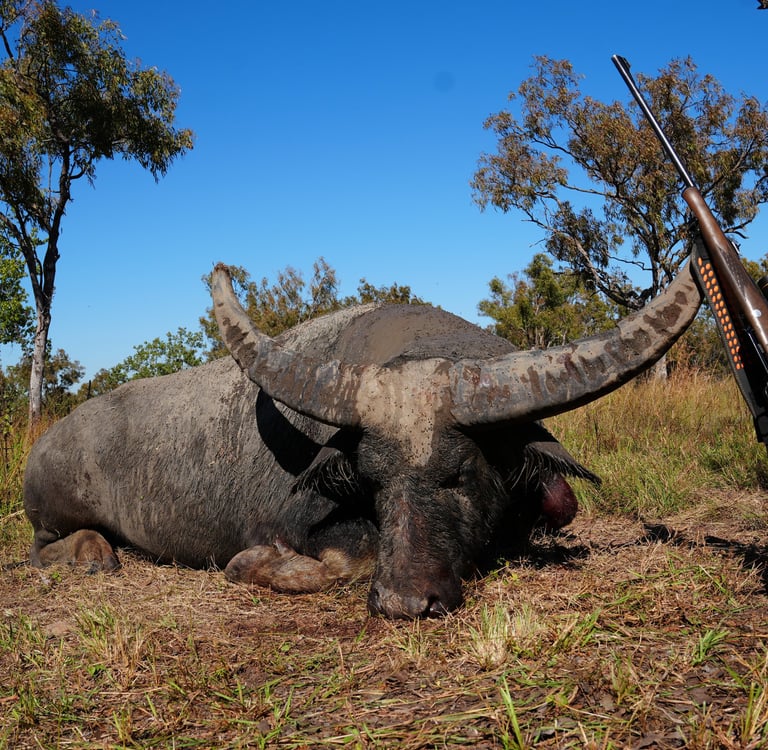
Beyond the challenge they present, mature bulls are admired for their distinctive horn shape broad bases sweeping outward and curving gracefully. Whether displayed as a skull mount or a shoulder mount, the horns alone serve as a lasting reminder of the animal’s scale, resilience, and the demanding conditions in which it was taken.
Origins in Australia
Water buffalo were first introduced to northern Australia in the early 19th century. Between 1824 and 1849, British settlers brought domesticated Asian water buffalo to the Northern Territory as a potential source of meat and labor for remote settlements such as those around present-day Darwin. These early attempts at settlement largely failed, and many buffalo were released or escaped into the wild.
With few natural predators and vast wetlands to inhabit, the animals thrived. Over time, feral populations spread across Arnhem Land, Kakadu, and other parts of the Top End.
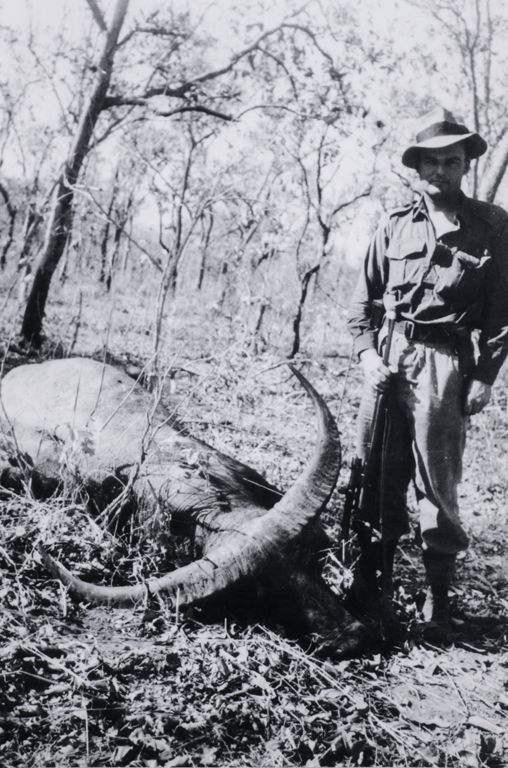
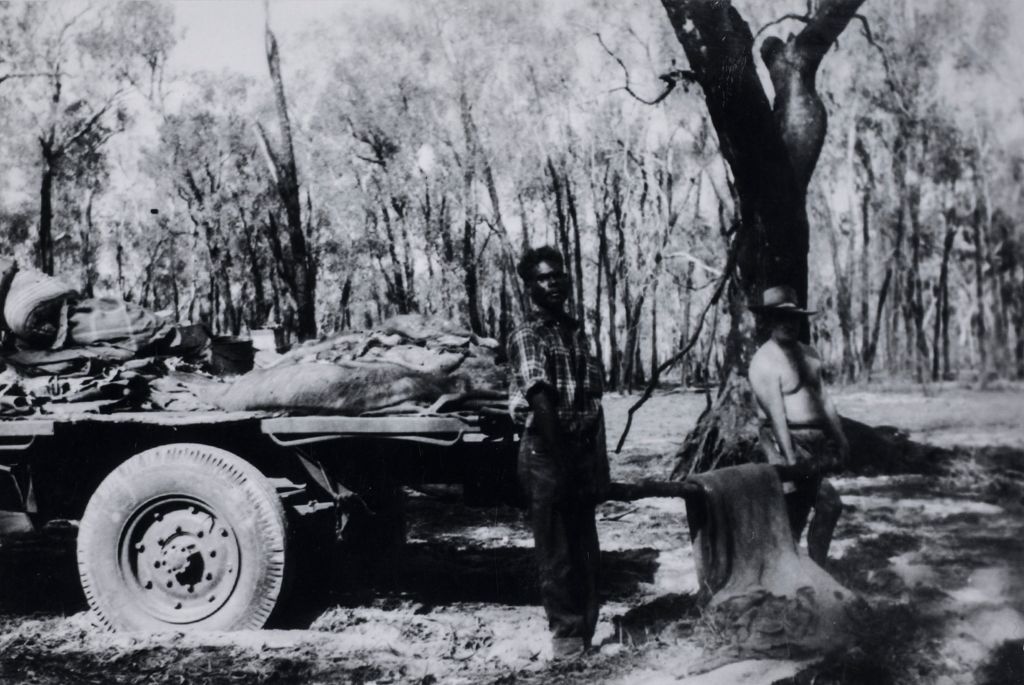
Truck load of Buffalo Hides 1952
William Dunstan stands next to a dead buffalo
Hunting and Economic Value
Water buffalo have become one of Australia’s most sought after big game animals. Regarded as powerful and unpredictable, they are considered dangerous quarry and are often compared to African Cape buffalo in terms of hunting challenge.
The species most commonly found in Australia is the Asiatic water buffalo. Trophy hunting, particularly in the Northern Territory, attracts international hunters each year and contributes significantly to the local economy. Indigenous landowners lease hunting rights on their land, creating income streams for remote communities.
Buffalo are also harvested commercially for meat and live export. Buffalo meat is leaner than beef and has found niche markets domestically and overseas.
For more information contact me below.